Bulk finds show us everyday life
Kate Clark (MAFS 2026; Student at Whitman College)
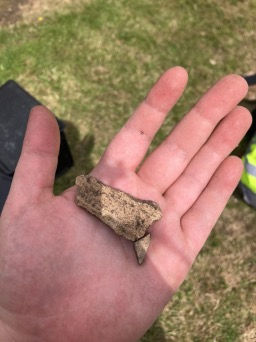
While finds like the Victorian toys, seals, and coins are certainly fascinating, overall, the bulk finds have stuck with me the most during the dig, as they represent the reality of life/they provide a narrative not as well kept in artwork and records. As writing and recording was less common in the medieval period than now, while certainly having a higher likelihood of recording within monastic settings, the things that have been protected and preserved are mostly “exemplary” documents- ones that are either visually impressive, tied to monetary value or related to famous events and figures- these are the types of documents more likely to survive the passing of time as they are deemed more important to protect and covet than other records- this has caused a loss in information relating to smaller things, everyday life, etc.
This is not to say that there are no everyday records from the medieval period, as some have survived, and other elements of daily life can be extracted from things like trade/gift ledgers- archaeology can provide an additional record of the “non-exemplary” aspects of life that aren’t often recorded through bulk finds.
Bulk finds also tell us about possible ecological differences that have occurred in the past few centuries - for example, many of the trenches, including my own, were finding large oyster shells. Oysters cannot currently be found in the Firth of Tay, but did historically exist there in quantity until they were overfished, leading to their current absence. The oyster finds at Lindores then verify the periods in which oysters were still abundant and give an example of how much life at the site of Lindores has changed.
Also, in regard to the Tay, its tidal reaches have changed since the medieval period due to industrial builds. Its original bank may be visible at Trench 7, as we were perched above the fields on what may have been the former bank of the river. The crushed red sandy layer found at the medieval level and the potential breakwater walls in the trench could also indicate this higher bank and even the possibility of seasonal/weather related flooding - possibly utilised by the monks to clear waste water.

Comments