The Monks and the ice-cold lake
Kathleen Laurance (MAFS 2026; Student at James Cook University, Australia)

My first introduction with monks happened when I was about 14- living in the rural areas of Italy. We had occupied a small house, that connected to a vineyard and a lake, with a town and church the stretched around reservoir. We arrived in winter and had estimated our stay to be around half a year. The climate had disagreed with me, leaving me cold (and completely miserable). It was the first time I had ever used a fireplace, and the first time I had accidentally set fire to the carpet. It was the most depressed I had been, away from home, away from the sun. But my mother was a person who believed in mind over matter and deemed my depression to be a symptom of inactivity.
She was right of course but when she suggested I start swimming in the
lake, I wanted to yank out my hair. “Cold water…. Is good for brains” (scientists)
And so, whenever I was deemed to moody to be inside, my mother would hand me bathers and shuffle me out the door. I couldn’t tell you when I begin to enjoy it, I think it was gradual. But soon I was swimming in that lake every day. I made it my mission to try and swim past buildings. From grocery stores and the pop-up markets. It was when I had made it past the church, did I grow more curious what they did inside.
I prided myself for being an early riser. But the monks tended to beat me too it. I tried to
be in the lake before I had to leave for school, The monks would be up before the sun and begin their chanting. You wouldn’t think it too loud, but their voices drifted across lake, and you could see the church windows glow in the early morning. I’m not a spiritual person, but those early mornings, shivering in that cold near pitch black lake, hearing them sing, was rather comforting.
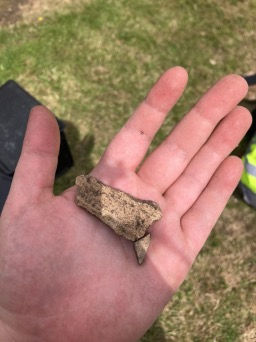
Now, years later while excavating At Lindores Abbey, I found myself thinking about those
mornings again.

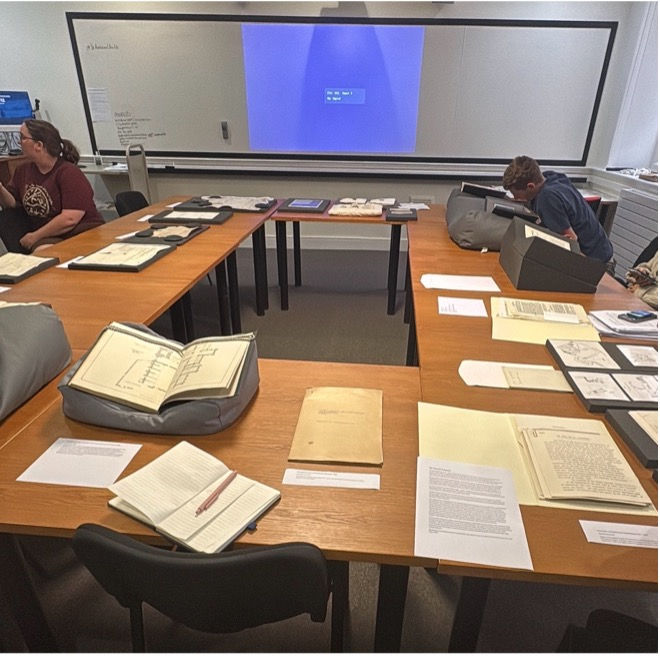
Unlike the church in Italy, Lindores is no longer filled with chanting’s voices. The monks are gone, and what remains are the traces they left behind: brick walls, crumbling foundations, fragments of daily life. Archaeology allows us to reconstruct aspects of the past, but it also highlights what has been lost. Standing among the remains of a monastery, it is easy to focus on the physical structures. Harder to imagine are the sounds and routines that once animated them. The course readings, particularly The Rule Of Saint Benedict, helped me understand the chanting and prayer I heard each morning. What seemed initially strange as a teen, was part of a carefully organised routine of discipline and worship.
.
I will never forget my first encounter with those monks, and I’m glad to now have this chance to further my understanding about them, through a historical lens.
Comments